
 The Standard Group Plc is a multi-media organization with investments in media
platforms spanning newspaper print
operations, television, radio broadcasting, digital and online services. The
Standard Group is recognized as a
leading multi-media house in Kenya with a key influence in matters of national
and international interest.
The Standard Group Plc is a multi-media organization with investments in media
platforms spanning newspaper print
operations, television, radio broadcasting, digital and online services. The
Standard Group is recognized as a
leading multi-media house in Kenya with a key influence in matters of national
and international interest.

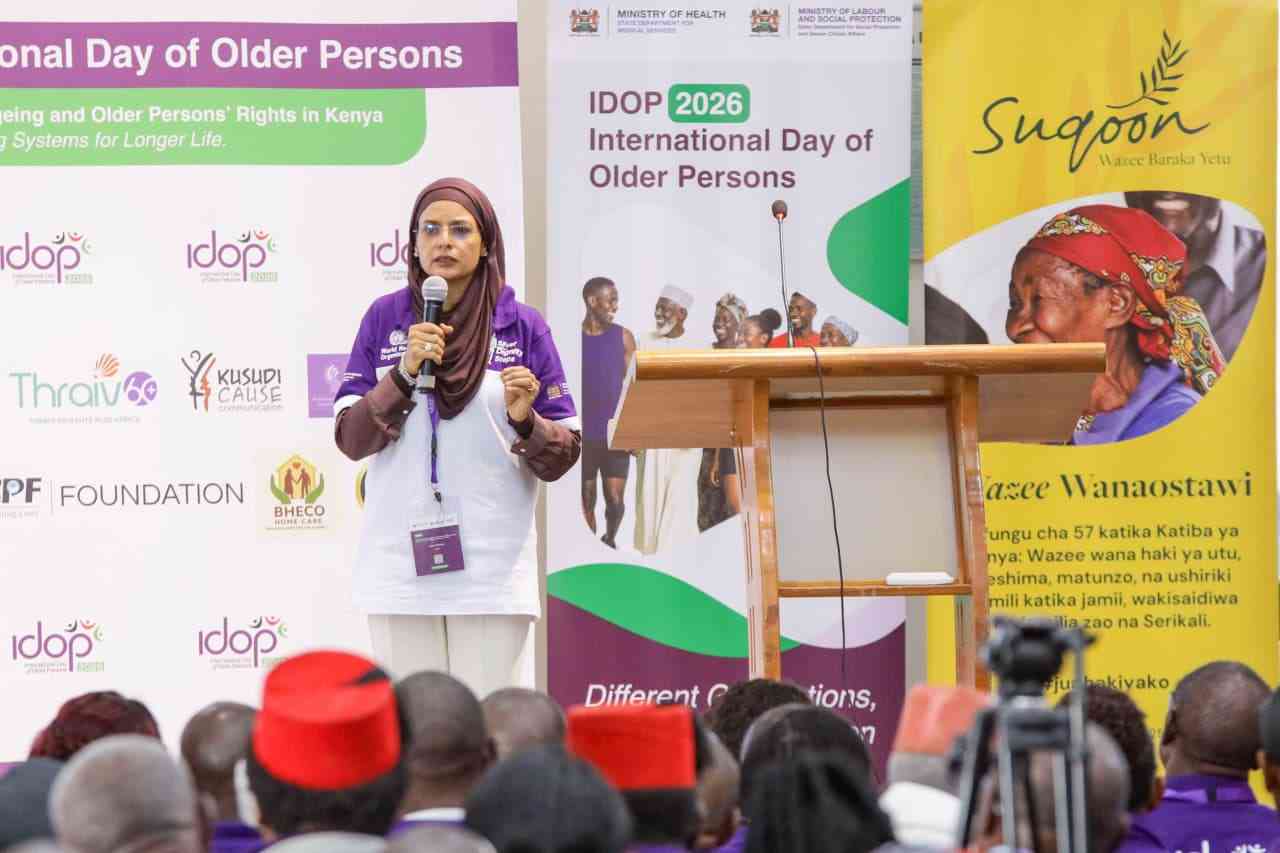
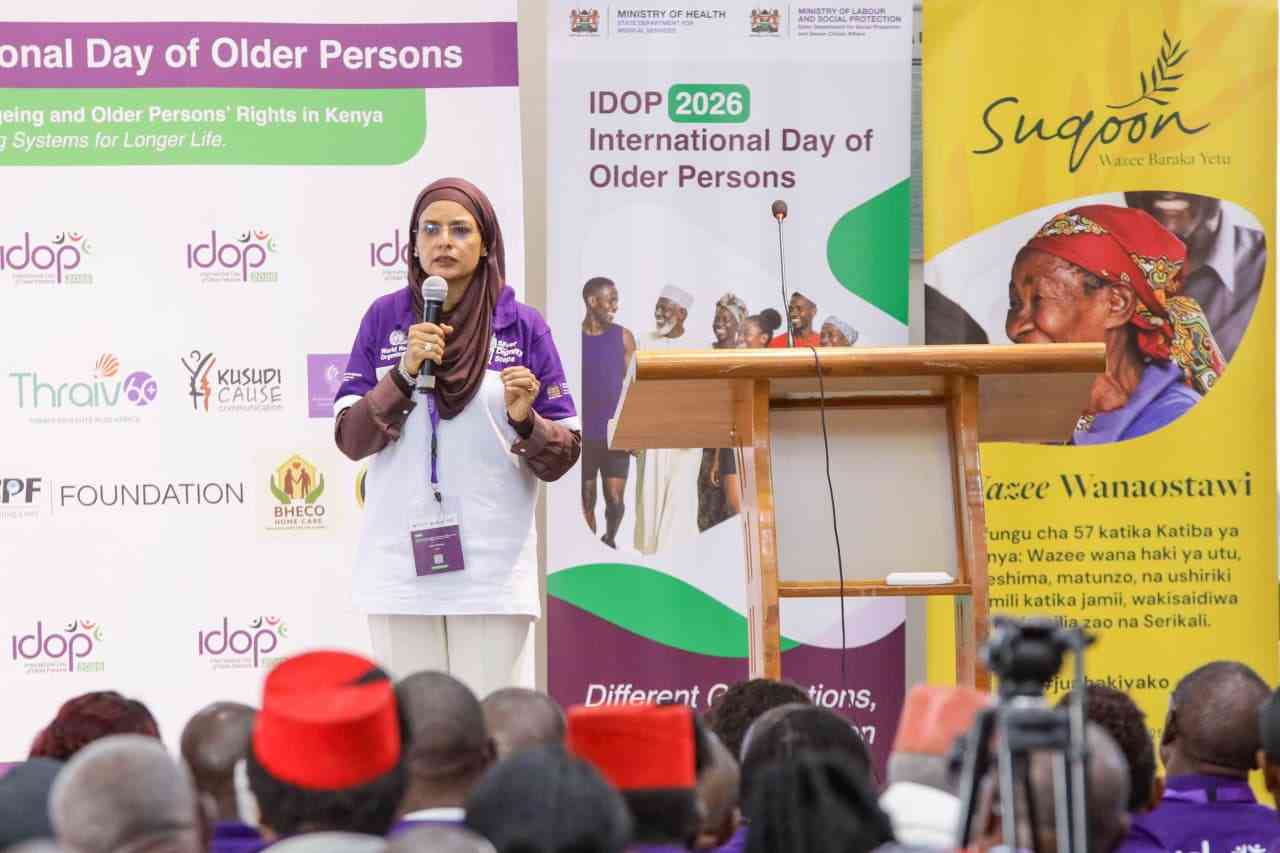
Shakira Adil Khawaja, founder of Suqoon Kenya, addresses delegates during the Fourth Kenya Social Protection Conference in Nairobi.[Courtesy]
Kenya faces a 10-year gap in social protection for older people, with the Constitution recognising them at 60 while the main government cash transfer starts at 70.
The gap comes as Kenya's population aged 60 and above is projected to more than double, from 2.9 million people in 2024 to 6.4 million by 2045, according to Kenya National Bureau of Statistics (KNBS) projections.
Suqoon, a social enterprise that works with older people on health, independence and community support, wants the government to close the gap before more Kenyans reach old age without adequate protection.
Its founder, Shakira Khawaja, made the call during the Fourth Kenya Social Protection Conference, arguing that longer lives should be matched by systems that help people remain healthy, independent and economically active.
“We worked hard for people to live longer. Now let us make sure our systems are ready for those longer lives, and that those lives are lived with function, contribution and dignity,” Khawaja said.
The Older Persons Cash Transfer (OP-CT), part of the Inua Jamii programme, covers people aged 70 and above, although the Constitution defines an older member of society as someone who has attained 60 years.
The difference has prompted calls for the cash transfer age to be aligned with the constitutional definition of an older person.
A 2024 National Assembly debate called for the government to consider lowering the eligibility age for Inua Jamii from 70 to 60, arguing that the current threshold leaves older people without access to the programme despite the constitutional definition.
The debate comes as Kenya expands its wider social protection system.
The government has committed to establishing and capitalising a Social Protection Fund, making benefit indexation predictable and expanding coverage to 2.5 million households.
The World Bank approved a $127.5 million project in 2025 to strengthen Kenya's social protection system and expand safety-net support to 12 million people, including older people and other vulnerable groups.
However, the World Bank has also warned that Kenya's safety-net coverage remains below the level needed to reach all households living in poverty, while the real value of some benefits has declined.
Khawaja said social protection should address health risks that can push older people into dependence and place pressure on families.
A fall at home, for example, can result in a fracture, hospitalisation and loss of mobility, sometimes forcing a relative to leave work to provide care.
“That grab rail is not just a renovation. It is health protection. It is caregiver protection. It is social protection,” she said.
Khawaja also called for the Older Persons Bill, 2024, to move to Parliament.
The proposed legislation seeks to strengthen protections for older people, including safeguards against abuse and provisions relating to their care and welfare.
She urged the government to protect older people's income, property and assets from abuse and maintain an assisted option for people who cannot use digital payments and services on their own.
The ageing trend is expected to put more pressure on social protection and family-based care.
KNBS projects the population aged 60 and above will rise to 3.4 million by 2030, 4.2 million by 2035 and 5.2 million by 2040 before reaching 6.4 million in 2045.
Khawaja said Kenya should change how it views older people, many of whom continue to raise grandchildren, farm, run businesses and support community savings groups.
“An elder is not where the life cycle closes. She is where it turns. When we invest in an older person, the return does not stop with her. It moves through the family, the community and into the next generation,” she said.
Older people involved in community activities in Nairobi's Mathare and Embakasi also said social connections remain important alongside financial support.
“We need more conversations between generations. Young people need to understand what older people go through and why they need to be cared for. There is a lot that younger people can learn from older people,” said 64-year-old Ann Wanjiru Mbuthia, organising secretary at Mathare Older Persons Network.
Peter Oyugi, 65, from Embakasi, said community activities can help older people remain connected.
“Suqoon has given us a space where we can come together, talk and interact. Sometimes an older person can stay in the house for many days without going anywhere. Having this space gives us a reason to come out and feel part of the community,” Oyugi added.








 join
join