
 The Standard Group Plc is a multi-media organization with investments in media
platforms spanning newspaper print
operations, television, radio broadcasting, digital and online services. The
Standard Group is recognized as a
leading multi-media house in Kenya with a key influence in matters of national
and international interest.
The Standard Group Plc is a multi-media organization with investments in media
platforms spanning newspaper print
operations, television, radio broadcasting, digital and online services. The
Standard Group is recognized as a
leading multi-media house in Kenya with a key influence in matters of national
and international interest.

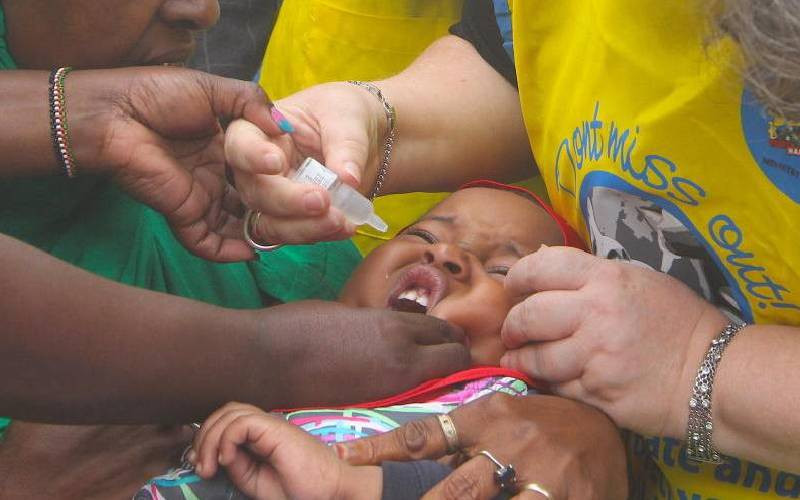
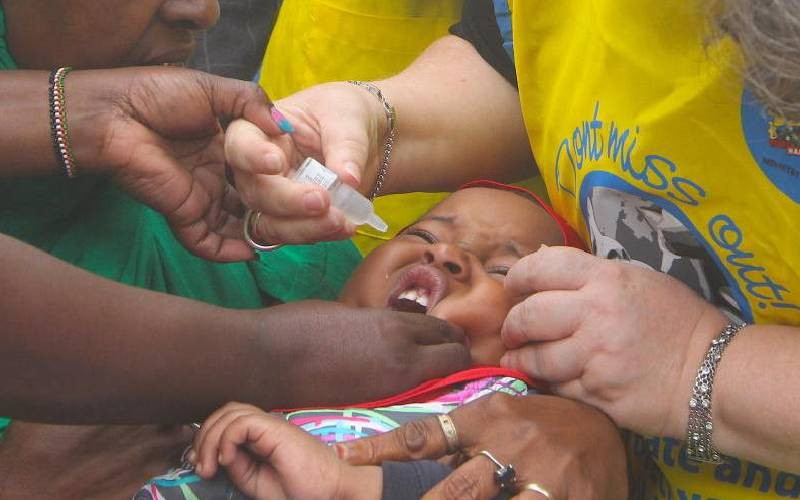
UNICEF Kenya representative Patrizia DiGiovanni gives polio vaccine to a child in Eastleigh, Nairobi, in 2018. [File, Standard]
The World Health Organisation has warned against changing childhood vaccination schedules without strong scientific evidence, after the United States announced significant changes to its immunisation policy.
WHO Director-General Tedros Adhanom Ghebreyesus said the organisation was concerned that the changes announced by the US government were not aligned with established evidence on childhood vaccination.
“Decades of evidence have shown when children are most vulnerable to disease, when vaccines provide the strongest protection, how many doses are needed, and which vaccines can safely be given together,” Tedros said.
He said vaccine evidence is continuously reviewed as new data emerge globally, but maintained that the evidence supporting routine childhood immunisation remains clear.
“Vaccines, including the MMR vaccine, are safe and do not cause autism,” he said.
Tedros also cautioned against delaying vaccinations or separating doses without a scientific basis, saying such approaches could leave children without adequate protection against preventable diseases.
- Kenya records 80 per cent jump in HPV vaccination among adolescent girls
- DRC Ebola outbreak nears 4,000 cases as transmission outpaces response
- WHO chief in DR Congo for talks on Ebola reponse
- DR Congo Ebola outbreak 'far from being under control': WHO chief
Keep Reading
“Delaying vaccines or separating doses unnecessarily does not make vaccination safer and can leave children unprotected,” he said.
The WHO position comes as countries continue to work to restore and strengthen routine immunisation coverage following disruptions caused by the Covid-19 pandemic.
Kenya has recorded progress, but coverage remains below the levels needed to ensure that every child is protected.
The latest WHO and UNICEF estimates show that 88 per cent of Kenyan children received the third dose of the diphtheria, tetanus and pertussis-containing vaccine in 2025.
Globally, 90 per cent of infants received at least one DTP-containing vaccine dose in 2025, while 85 per cent completed the three-dose series. WHO and UNICEF said the global figures increased by one percentage point from 2024, but remain one percentage point below 2019 levels.
Measles remains one of the clearest indicators of immunity gaps because of how rapidly it spreads among unvaccinated populations.
WHO estimates that 84 per cent of children globally received their first measles-containing vaccine dose in 2025. Coverage of the second dose remains lower, leaving millions of children susceptible to infection.
Kenya has used both routine services and mass campaigns to close these gaps.
In July 2025, the country vaccinated more than 16 million children against measles, rubella and typhoid during a 10-day campaign conducted across all 47 counties. More than 5.18 million children received the measles-rubella vaccine, representing 81 per cent coverage of the targeted population.
Kenya is also expanding vaccination among adolescents. Between January and June 2026, Kenya administered at least one dose of the HPV vaccine to 472,845 adolescent girls, compared with 258,698 during the same period in 2025 an increase of more than 80 per cent.
WHO and UNICEF estimate that about 69 per cent of adolescent girls in Kenya had received one HPV vaccine dose.
For health authorities, the challenge is therefore twofold: reaching children who have missed vaccines while ensuring that those already accessing health services complete the recommended schedules.
Tedros said vaccination policy should be based on independent assessment rather than political considerations.
“Vaccination policy should be guided by rigorous, independent, and transparent review of the best available science and not by political influence,” he said.
The WHO intervention also comes against a wider global backdrop of vaccine hesitancy and uneven access. WHO estimates that 13.5 million children received no vaccination at all in 2025, while DTP3 coverage stood at 85 per cent globally.
In Kenya, the latest figures show that the majority of children are being reached by routine vaccination services, but the remaining gap represents hundreds of thousands of children who may lack full protection.
The issue is particularly important for diseases such as measles, where high population coverage is required to prevent outbreaks.
WHO and UNICEF say coverage of at least 95 per cent with two doses of measles-containing vaccine is needed to provide strong community protection.
The debate over vaccination policy in the US therefore comes as countries continue to balance scientific guidance, public confidence and access to immunisation.
For Kenya, the immediate priority remains ensuring children receive the vaccines recommended under the national immunisation programme and closing the remaining coverage gaps.
Vaccination schedules are designed around the age at which children face the greatest risk from particular infections and when vaccines are expected to provide the strongest protection.
Changing the timing or number of doses can therefore affect how long a child remains protected.
WHO says immunisation schedules are continually reviewed as new scientific evidence becomes available. Its current position is that changes should be based on rigorous, independent assessment of the evidence rather than political considerations.








 join
join