
 The Standard Group Plc is a multi-media organization with investments in media
platforms spanning newspaper print
operations, television, radio broadcasting, digital and online services. The
Standard Group is recognized as a
leading multi-media house in Kenya with a key influence in matters of national
and international interest.
The Standard Group Plc is a multi-media organization with investments in media
platforms spanning newspaper print
operations, television, radio broadcasting, digital and online services. The
Standard Group is recognized as a
leading multi-media house in Kenya with a key influence in matters of national
and international interest.


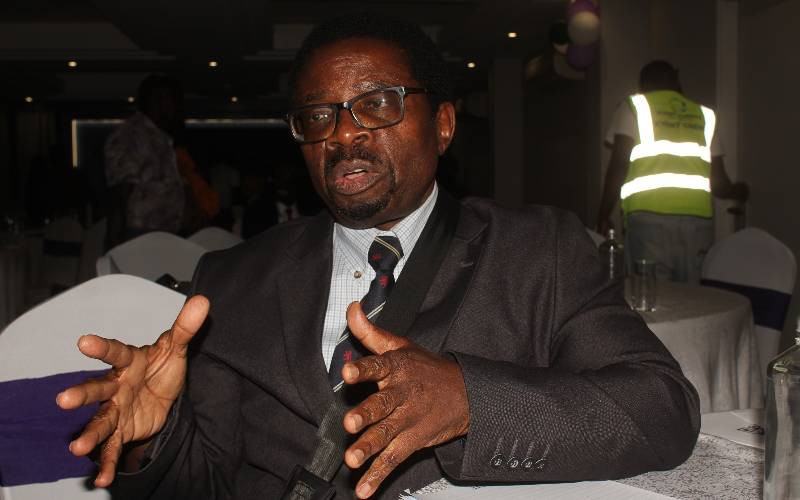
National Museums of Kenya chairman Edwin Abonyo (In the middle) samples indigenous medicine at the 1st International Investment Conference and Trade Fair on Indigenous Knowledge in Nairobi. [Courtesy, NMK]
Calls to integrate indigenous medicine into Kenya’s formal healthcare system are intensifying as concerns grow over the rising cost and side effects associated with conventional treatments.
Health experts and stakeholders note that many Kenyans continue to rely on modern medicine despite its high expenses and, in some cases, harsh adverse effects, limiting access for low-income populations.
In contrast, traditional remedies long used within communities are increasingly being viewed as a more affordable and accessible alternative, prompting renewed efforts to scientifically validate and incorporate them into mainstream healthcare to widen treatment options and improve outcomes.
Among the panellists on the topic “Traditional vs Modern Medicine: Traditional Medicine as a Pillar for Sustainable Health” was Dr Samson Oyugi, a vital therapist based in Ongata Rongai.
Dr Oyugi, drawing from his international experience, noted that countries across Asia and other parts of the world are increasingly adopting natural approaches to health. He said a growing number of global medical practitioners are now advocating for natural diets and plant-based medicine.
“It is my humble appeal to the government to consider natural ways of addressing health challenges. From my travels to countries such as Thailand, Japan and New Zealand, I have seen a growing shift towards natural living and plant-based medicine,” he said.
- Why the rising healthcare spending has failed to heal a country on its sickbed
- Kenya's healthcare training evolves with career choices
- MPs call for overhaul of cancer treatment access and funding
- Tharaka Nithi residents to benefit from specialised healthcare services
Keep Reading
He, however, emphasised the need for collaboration between traditional practitioners and conventional medical professionals, noting that modern diagnostic tools such as laboratory tests, MRIs, CT scans and X-rays remain essential.
“We are not opposing conventional medicine. Diagnosis must be scientific, but when it comes to treatment, natural remedies should also be given priority where appropriate because the ultimate goal is healing,” he added.
Dr Oyugi also sought to dispel misconceptions linking traditional medicine to superstition, arguing that indigenous remedies are rooted in nature and human history. He cited ongoing cases of patients undergoing herbal treatment, including Jane Ndegwa and Simon Mbegi, who he said are responding well.
His sentiments were echoed by Dr Atunga Nyachio, a senior research scientist and Director of Research and Product Development at the Kenya Primate Research Institute, who noted that Kenya is in the process of developing a national policy to regulate and mainstream traditional health practitioners.
“In the East African region, several countries already have national policies on traditional medicine. Kenya is making efforts to develop one that will help integrate traditional healthcare into the primary healthcare system,” he said.
He added that scientific validation of herbal remedies will be key to ensuring safety, efficacy and acceptance within the broader health sector, citing countries such as India and Brazil that have made significant progress in integrating traditional medicine into their national systems.
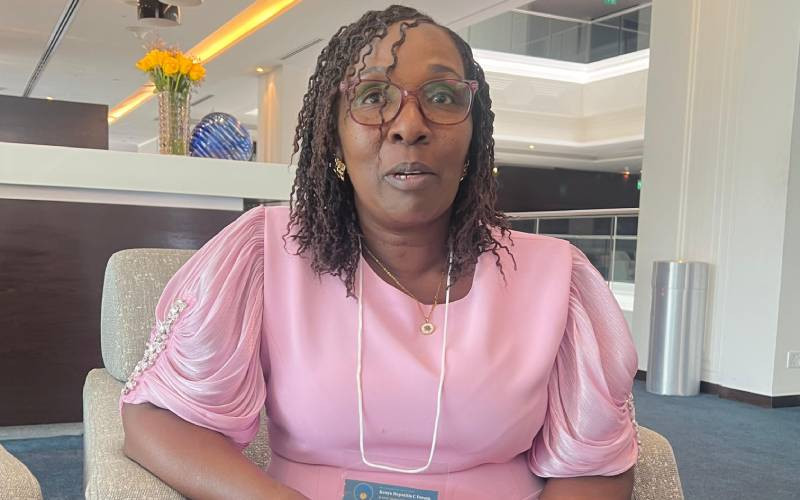
Mary Gikungu, Director General of the National Museums of Kenya, highlighted the importance of preserving and utilising indigenous knowledge as an economic asset.
“When we talk about indigenous knowledge intellectual assets, this is part of our mandate. We are looking at how this country can open a new chapter by leveraging these resources to drive economic growth and build industries,” she said.
She further emphasised the need for Kenyans to embrace their cultural heritage, noting that many countries have successfully turned their traditions into valuable economic ventures.
.Among the participants was Simon Mbegi from Kisii County, who shared his long battle with cancer. Mbegi was diagnosed with maxillary sinus cancer in 2020 and underwent radiotherapy and chemotherapy before having his first surgery in 2021. Although the cancer cells were initially suppressed, another tumour developed in December 2023.
“I continued with treatment, and in 2024, I underwent a second surgery. Part of the upper section of my mouth was removed because the tumour was large, and doctors had to fit a prosthetic to prevent deformity,” he said.
He added that in August last year, he underwent a third surgery, during which part of the upper jawbone was removed and replaced with a supportive prosthetic that he still uses today.
Following the third surgery, Mbegi opted to try traditional medicine administered by Dr Samson Oyugi. He has been on the treatment for the past six months and reports significant improvement.
“Recently, I underwent a CT scan and later an MRI in March, and the tumour is no longer visible. So far, I feel much better and stronger, and I intend to continue with the traditional treatment,” he said.
Mbegi called on the government to support alternative treatment approaches, noting that conventional therapies had severe side effects. “In my case, I lost salivary glands on the left side of my mouth. Traditional medicine does not have such side effects—though some remedies are bitter, they help over time,” he added.
Also present was Jane Ndegwa from Meru County, a woman in her 50s who recounted her experience with gastric cancer. She said she suffered persistent stomach problems before being diagnosed in 2023.
Jane explained that doctors recommended surgery to remove part of her stomach, but she declined and instead researched alternative options. This led her to Dr Oyugi, who prescribed traditional remedies.
“Since November 2024, I have been using only traditional medicine, apart from the one month I was hospitalised. Since then, I feel okay and can comfortably eat any food, like the lunch we had today,” she said.
She added that recent tests showed no trace of cancer cells. “I had tests done last month, and there are no visible cancer cells in my stomach,” she said during an interview after a conference lunch break.
The two are among hundreds of patients turning to traditional medicine to manage chronic illnesses, many of which remain a significant burden to communities.
The event was organised by the Natural Products Industry Programme in conjunction with the National Museums of Kenya and the Ministry of Gender, Culture and Children Services.
The National Government, through the National Museums of Kenya, a State Agency under the Ministry of Gender, Culture and Children Services, State Department for Culture, the Arts and Heritage, is implementing the NPI Programme.
The programme is advancing Heritage-Based Enterprises, a flagship project under Kenya Vision 2030, with the aim of harnessing the natural products industry in Kenya.
Under Phase One, the government funded the documentation and digitisation of Indigenous Knowledge Intellectual Assets (IK DoDi) across 13 pilot counties, including Garissa, Kakamega, Kericho, Kilifi, Kisii, Makueni, Marsabit, Murang’a, Narok, Siaya, Tharaka Nithi, Turkana and Vihiga.
This initiative led to the establishment of the Indigenous Knowledge Innovation Bank (InKiBank), a platform designed to regulate access, user rights and benefit-sharing for local communities
The three-day forum that kicked off on 21st April, themed “Unlocking Investment Opportunities in Kenya’s Indigenous Wealth: A New Growth Area of the Economy,” has brought together researchers, policymakers and practitioners to explore ways of commercialising indigenous knowledge while safeguarding its authenticity and sustainability.




 join
join