
 The Standard Group Plc is a multi-media organization with investments in media
platforms spanning newspaper print
operations, television, radio broadcasting, digital and online services. The
Standard Group is recognized as a
leading multi-media house in Kenya with a key influence in matters of national
and international interest.
The Standard Group Plc is a multi-media organization with investments in media
platforms spanning newspaper print
operations, television, radio broadcasting, digital and online services. The
Standard Group is recognized as a
leading multi-media house in Kenya with a key influence in matters of national
and international interest.


Researchers from Spain and Uganda are using Microsoft Research’s cloud-based imaging platform, Tyger, to improve the quality of MRI scans generated by ultra-low-field systems, a development that could expand access to advanced medical imaging in underserved communities across Africa.
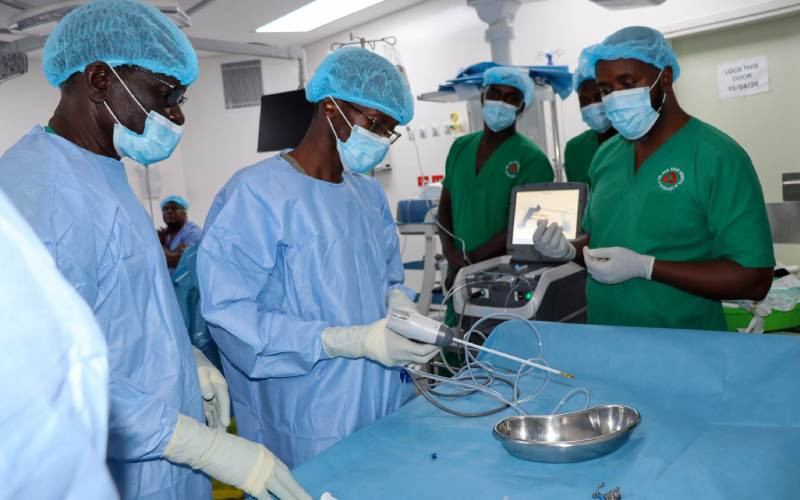
Through a collaboration between the Institute of Instrumentation for Molecular Imaging (I3M) and Mbarara University of Science and Technology (MUST), Tyger enables computationally intensive image reconstruction and denoising to be performed in the cloud. This produces clearer, more interpretable images while reducing reliance on expensive local computing infrastructure.
The partnership emerged from efforts to advance MRI research in Sub-Saharan Africa. While the MRI system could capture signals, converting them into clear and reliable images remained challenging because of noise, limited processing power and infrastructure constraints.
To address this, researchers adopted Tyger, an open-source platform developed by Microsoft Research.
By shifting image reconstruction to the cloud and combining it with denoising models such as SNRAware, also developed by Microsoft Research, the teams produced images with significantly improved clarity suitable for clinical interpretation.
“This collaboration demonstrates how cloud computing can help overcome some of the barriers that have traditionally limited access to advanced medical imaging,” said Michael Hansen, General Manager of Medical Imaging at Microsoft Research Health Futures.
“By enabling image reconstruction and enhancement in the cloud through Tyger, researchers can produce clearer MRI images without relying on expensive local computing infrastructure. This opens new possibilities for making high-quality diagnostic imaging more accessible in underserved communities and ultimately improving patient care.”
Traditionally, MRI image quality has depended on powerful magnets, specialised infrastructure and high-performance local computing systems. Tyger takes a different approach by treating MRI scanners primarily as signal-capture devices while image reconstruction is handled in the cloud.
In the I3M-MUST collaboration, raw MRI signals are transmitted to Microsoft Azure, where denoising and distortion-correction algorithms process the data before returning higher-quality images to researchers.
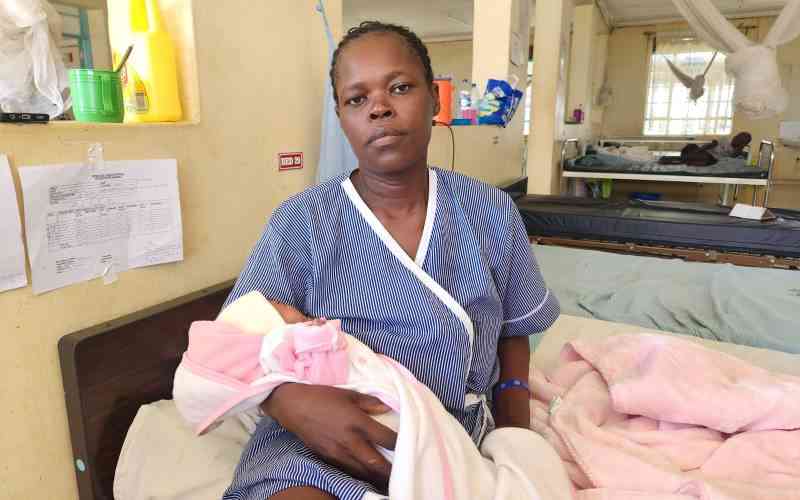
The project addresses a critical healthcare challenge in Uganda, where access to advanced imaging remains limited. Many patients must travel long distances for MRI services, and in some areas, the nearest scanner may be hundreds of kilometres away.
“For many patients, travelling to distant hospitals for imaging is simply not feasible,” said Eng. Dr Johnes Obungoloch, Dean of the Faculty of Applied Sciences and Technology at MUST.
“Technology like this could help bring advanced imaging to communities that have never had access to it,” he added.
In such settings, image quality is more than a technical issue. Delayed diagnosis can have serious consequences for patients with stroke, traumatic injuries, hydrocephalus and other conditions requiring timely intervention.
The collaboration began in 2023 following discussions between researchers from I3M and Microsoft Research on addressing MRI challenges in low-resource settings. Since then, teams from I3M and MUST have worked together to test reconstruction methods and connect the Ugandan MRI system to Tyger’s cloud-based imaging pipeline.
At Mbarara University, the initiative has also become a capacity-building programme. Researchers are training engineering and medical students, as well as community healthcare workers, in MRI technologies and image reconstruction techniques.
Students involved in the project are also gaining skills in electronics, design and signal processing, contributing to broader scientific and technological development.
“We have scanned dozens of volunteers since 2025. Early on, we could only image part of the head. Today, we can acquire full-head images,” said Obungoloch.
According to Microsoft Research, Tyger creates a flexible architecture in which hardware, software and imaging workflows work together through shared cloud computing resources.
The collaboration between I3M and Mbarara University demonstrates how advances in software and cloud computing can support imaging research and innovation in regions where healthcare infrastructure remains limited.












 join
join