×

The Standard e-Paper
Home To Bold Columnists
 The Standard Group Plc is a
multi-media organization with investments in media platforms spanning newspaper
print operations, television, radio broadcasting, digital and online services. The
Standard Group is recognized as a leading multi-media house in Kenya with a key
influence in matters of national and international interest.
The Standard Group Plc is a
multi-media organization with investments in media platforms spanning newspaper
print operations, television, radio broadcasting, digital and online services. The
Standard Group is recognized as a leading multi-media house in Kenya with a key
influence in matters of national and international interest.

Audio By Vocalize

All formal settlements in Mombasa will receive a facelift through the Kenya Informal Settlement Improvement Project (KISIP), a county-led partnership with the World Bank.
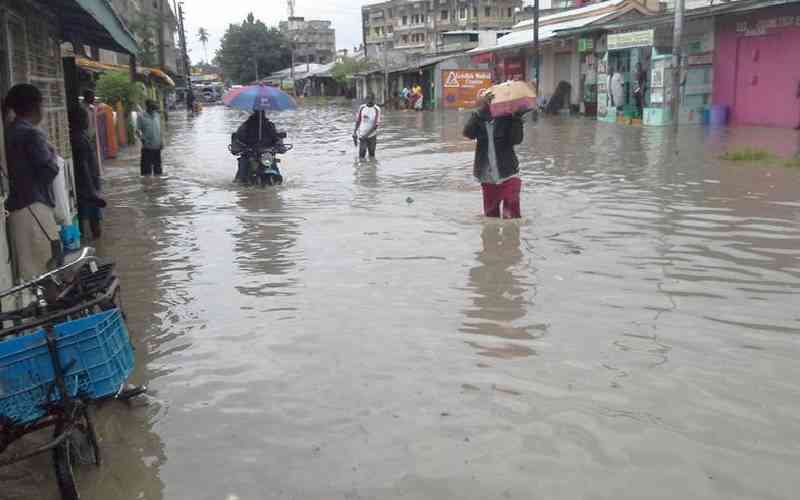
The project aims to bring semblance, dignity, and comfort to the slum areas. “Mombasa, being one of the major cities in Kenya, suffers the fate of nature, especially during rainy seasons that overwhelm the available drainage systems, causing sanitation issues in the informal settlement areas,” said County Executive in charge of Lands, Housing and Urban Planning, Mohamed Hussein.
In a recent address at the annual Estate Agents’ conference in Mombasa, the county official announced that Governor Abdulswamad Shariff Nassir’s administration has launched a comprehensive initiative to address the city’s deeply entrenched land and housing challenges.
The initiative targets unresolved historical land disputes, issuing title deeds, and improving urban planning to manage the rapid growth of informal settlements. He detailed the ambitious programme designed to secure land ownership for thousands of residents.
“’This initiative is part of the county’s broader strategy outlined in its County Integrated Development Plan for 2023-2027, which aims to create a development blueprint for the region,” said the county executive.
He said the seven informal settlements in Mombasa, including Majaoni in Kisauni sub-county, Chaani in Changamwe, Msufini in Jomvu, Likoni 203, Kibundani and Kidunguni in Likoni, and Kisumu Ndogo in Nyali sub-county, have been getting a facelift.
“These have been identified and mapped, and since then, there has been a great improvement in the settlements. From drainages to land tenure security through the issuance of title deeds to residents, erection of high mast lights for security, famously known as ‘Mulika Mwizi’, multipurpose social halls, and Early Childhood Development centres make some of the projects that KISIP has implemented,” Mohamed said.
Economic impact
He said an area like Kisumu Ndogo in Nyali frequently floods during rains and remains insecure due to the socioeconomic status of residents.
Through the intervention of KISIP, 10 access roads have been built, and high-mast lights have been installed to help traders conduct their businesses at night. This had led to a positive economic impact on the area, with access roads opening up the interiors of the area.
Water shortage continues to be a major challenge for those in informal settlements, with those who have access barely able to pay monthly bills.
Allan Wasike, a trainer assistant with Social Emotional Skills Training (SEST) in the Kisumu Ndogo, lauded the Nyota SEST programme to empower youth, particularly those in slum settlements.
Director of Land Administration Rose Munupe, who also serves as the KISIP county coordinator, said four informal settlements in Jomvu Kuu, Ziwa la Ngombe, Mkomani and Jomvu Mikanjuni have benefited from street lights, storm water drainage and slope stabilisation, public toilets, and street lights and footpaths.
“The KISIP projects have boosted urban development in the county with a fast-rising population that needs a matching, well-developed infrastructure. The county has started to benefit from revenue collection of land rates from parcels of land that were regularised,” Mohamed stated.
Mombasa’s land problems are a complex web of historical injustices dating back to the colonial era, characterised by issues of absentee landlords and a widespread “squatter” population.
Stay informed. Subscribe to our newsletter
According to recent studies, nearly 60 per cent of Mombasa’s population resides in informal settlements, which have grown rapidly due to urbanisation and a shortage of affordable housing. These areas, such as Bangladesh, Mikindani, and Kaa Chonjo, often lack basic services like clean water, sanitation, and proper waste management.
The squatter issue has been described as a “ticking time bomb”, with undocumented land ownership and overlapping claims leading to frequent disputes and stalled development projects.
Mohamed stated that as part of their initiative to operationalise the Ardhi Fund, an initial Sh50 million has been allocated in the 2025/2026 financial year.
“This revolving fund is designed to facilitate peaceful settlements between landowners and squatters and to prevent unlawful evictions. The county plans to use the fund to purchase land from willing sellers to resettle residents,’’ he said.
“The county aims to boost the number of titles issued from 2,500 to 30,000 by 2027, providing security of tenure to thousands of families. Recent titling exercises have already taken place in Miritini and Chaani,” explained Mohamed.
He said the county is working closely with the State to align its efforts with broader land reforms. The National Housing Corporation is set to construct 20,000 units in Changamwe, comprising affordable, social, and market-rate housing.
Additionally, the government has rolled out a Sh7 billion project in Nyali to build 2,000 units, which is part of a larger plan to construct 100,000 units across the Coast region.








Subscribe to our newsletter and stay updated on the latest developments and special offers!







 join
join