×

The Standard e-Paper
Stay Informed, Even Offline
 The Standard Group Plc is a
multi-media organization with investments in media platforms spanning newspaper
print operations, television, radio broadcasting, digital and online services. The
Standard Group is recognized as a leading multi-media house in Kenya with a key
influence in matters of national and international interest.
The Standard Group Plc is a
multi-media organization with investments in media platforms spanning newspaper
print operations, television, radio broadcasting, digital and online services. The
Standard Group is recognized as a leading multi-media house in Kenya with a key
influence in matters of national and international interest.

Audio By Vocalize

Activist during protests against a US-built Ebola quarantine centre planned for Kenya’s Laikipia Air Base in Nairobi, June 2, 2026. [AFP]
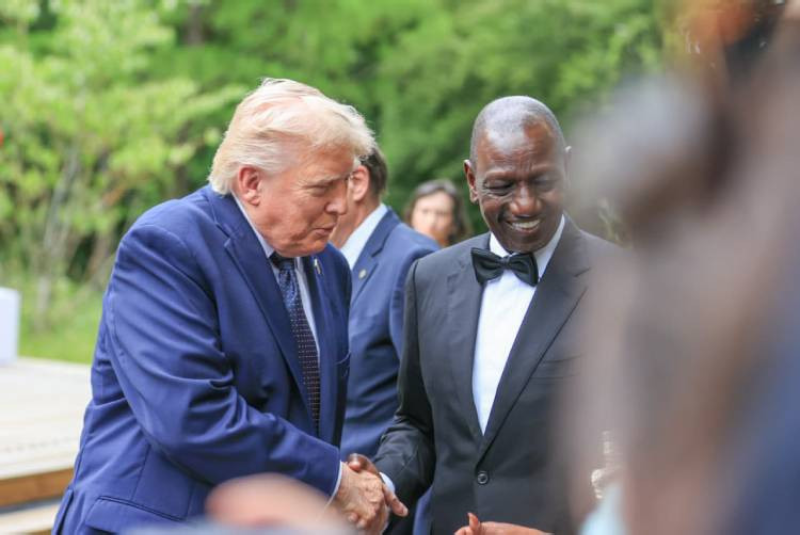
The Ebola quarantine centre agreed upon between the United States and Kenya in Laikipia must be viewed through the lens of national interest, not sectarian squabbling. Any diplomatic agreement between two nations operates on the principle of quid pro quo. President Donald Trump's public and private life has been defined by deal-making, while President William Ruto promotes Kenya on the global stage with a keen eye for economic partnerships. Rather than playing politics, we should focus on the finer details of what Kenya stands to gain from this arrangement.
We must also remember that, whether Rigathi Gachagua, Kalonzo Musyoka, or Fred Matiang'i were president, they would likely embrace the Ebola deal. That is because governments are expected to pursue opportunities that advance national interests, strengthen strategic partnerships, and deliver tangible benefits to their citizens.
The debate, therefore, should not be about political personalities but about outcomes. Kenyans deserve a clear understanding of what this agreement will bring in terms of health infrastructure, economic opportunities, scientific research, sharing of expertise, and public health preparedness. Let our political leaders and other dissenting voices put politics aside and focus on the long-term benefits of the deal.
Our main focus is to put scrutiny on the words of the US Secretary of State Marco Rubio’s statement that the Laikipia facility is only intended to serve Americans and not Kenyans who may be infected by the deadly virus. Secondly, we need to understand that the deal may end up being a blessing in disguise, given the fact that the Trump administration slashed all funding to the WHO, UNICEF and USAID.
The question on every Kenyan’s mind is simple: When was this deal actually made, who sat at the negotiation table, and what did we give up? Especially after Rubio’s statement saying the facility would only benefit American citizens.
Even the partnership in health mooted last year between Kenya and the US, but later contested in court due to privacy concerns, wasn’t a bad idea so long as Kenyan citizens understood the size of our pie in the deal. What is wrong with the developing world having accurate data on diseases such as diabetes, tuberculosis, cancer and HIV that affect millions of our people?
Consider AMPATH Kenya, one of Africa's largest academic health partnerships based in Eldoret. Through collaboration between Moi University, Moi Teaching and Referral Hospital, and leading American universities, the health body has transformed HIV/Aids care and now diversified to address mental health, cancer, hypertension and diabetes.
It therefore makes little clinical sense to raise privacy concerns when AMPATH already holds extensive epidemiological and patient-level health data across Kenya. The Kenyan government’s primary mandate is to ensure this Ebola facility matures into a robust health institution modelled on AMPATH so that our population can actually benefit from expanded surveillance, diagnostics, and care capacity, especially on infectious diseases.
On the diplomatic front, Kenya enjoys a special relationship with the US. Trump has imposed visa restrictions on dozens of African countries, yet Kenya has been spared. We are also a major non-NATO ally and have deployed security personnel to Haiti at the request of the US.
What Kenyans want to see is the US bringing experts, advanced equipment and resources that will benefit our people long after the Ebola has passed. This project must be built for the future, not just for Ebola.
Kenyans have every right to demand full disclosure of economic, health, diplomatic and security agreements. However, some state-to-state arrangements are negotiated behind closed doors and only become public when implementation is already underway. Going to court is not a bad idea; Kenya has a robust judicial system.
But the truth is, the Laikipia project is already in motion and unravelling it now would be politically fraught. Prime Cabinet Secretary Musalia Mudavadi and Principal Secretary Korir Sing’oei owe Kenyans full disclosure on the terms. The public has a right to know: Will the facility treat infected Kenyans, or only American nationals? Will it bolster our broader pandemic preparedness, or remain limited to Ebola?
Mr Nyaringo is a Kenyan public affairs commentator and governance advocate in Washington, US
Stay informed. Subscribe to our newsletter

Subscribe to our newsletter and stay updated on the latest developments and special offers!







 join
join